Guide and information of Japan travel, with Hiroshima, Onomichi, Miyajima, Kurashiki, Naoshima, Hagi, Tsuwano, Iya.
travel to
TOKYO RYOKAN OFFICIAL WEB SITE
HOME
Essential Info
Sightseeing
Eating
Sleeping
Shopping
Festival
Transportation
One Day Tour
Tokyo Guide
Please click below to find more information/links (at new pages).
Transportation1
Transportation2
Transportation (From/To Where) Colum at Smart Support
JR West Passes
All Shikoku Rail Pass
Tosa Kuroshio Railway
Sightseeing Spots
Tottori Sakyu
Izumo Oyashiro Shrine
Adachi Museum Garden
Seto Ohashi Bridge
Kurashiki
Geiyo islands
and
Onomichi
Miyajima Itsukushima Shrine
and
Kintaikyo
Naoshima
Matsuyama
and
Uchiko
Shikoku 88 Temples Pilgrimage
Hot Spring
Tomonoura Onsen
Kaiyu Inn
Hagi Onsen
Yuda Onsen
Nagato Yumoto Onsen
Scenic Route
(
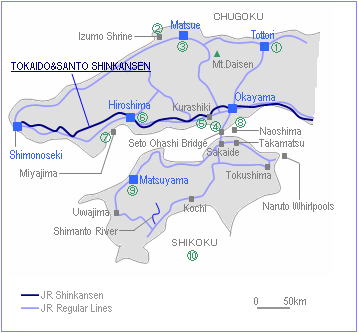
Seto Ohashi Bridge Line
and
Yosan Line
)
瀬戸大橋線は瀬戸大橋を渡り本州の岡山と四国の高松を結びます。車窓から瀬戸内海の絶景を望み、夕暮れ時の景色は素晴らしいです。
予讃線は海線・山線ともローカル色豊かな絶景路線です。
Transportation
Where is Asakusa
LCC (Low Cost Carrier)
Japan Rail Pass
Rail Passes
Special Train Tickets
Narita Airport
Haneda Airport
Japan in Asia
From/To elsewhere
Tokyo - Kyoto
Tokyo - Takayama
Tokyo - Naoshima
Tokyo - KumanoKodo
Tokyo - Sapporo
Tokyo - Okinawa
Area by Area
Hokkaido
Tohoku
Kanto
Chubu Hokuriku
Kansai
Chugoku Shikoku
Kyushu Okinawa
Copyright
TOKYO RYOKAN
All Rights Reserved