Guide and information of Japan travel, with Nagoya, Takayama, Shirakawago, Kanazawa, Tsumago, Matsumoto, Kamikochi.
travel to
TOKYO RYOKAN OFFICIAL WEB SITE
HOME
Essential Info
Sightseeing
Eating
Sleeping
Shopping
Festival
Transportation
One Day Tour
Tokyo Guide
Please click below to find more information/links (at new pages).
Transportation1
Transportation2
Transportation (From/To Where) Colum at Smart Support
JR East Nagano/Niigata
JR Central/West
JR West Passes
Sightseeing Spots
Noto Peninsula
Kenrokuen Park
/
21st Museum
Tateyama Kurobe Alpine Route
Matsumoto Castle
Kamikochi
Hida Takayama
and
Shirakawago
and
Gokayama
Fukui Eiheiji Temple
Mt. Fuji
Izu Peninsula
Nagoya
Hot Spring
Echigo Yuzawa Onsen
Monkey Onsen
Manza Onsen
Gero Onsen
Go Gifu Onsen
Yutaki Onsen in iiyama
Scenic Route
(
JR Tadami Line
,
JR Iiyama Line
,
JR Ooito Line
,
JR Takayama Line
and
Tateyama Kurobe Alpine Route)
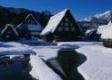
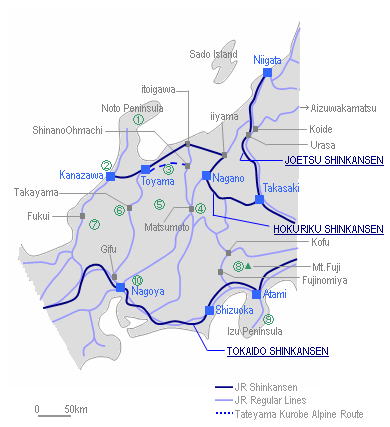
只見線は会津若松〜小出間の日本有数の豪雪地帯を通り、沿線を流れる川の水面や山々の新緑と紅葉の美しさは有名で、特に車窓からの紅葉風景は全国随一です。また厳しく静寂な雪景色は息をのむほどの美しさです。
飯山線の長野から十日町間は日本の原風景のなかを走ります。日本最長の信濃川は長野県に入って千曲川に名を変え、川はゆったりと蛇行をし、何度乗車しても見飽きることがなく新しい発見があります。冬は一駅ごとに白さを増す雪景色に目を奪われてしまいます。
大糸線は松本と糸魚川を結び、日本の屋根と言われる北アルプスが一望できる路線で、夏は登山客、冬はスキー客で賑わいます。
岐阜から富山を結ぶ高山本線は、沿線に飛騨高山や下呂温泉などの観光名所が多く、観光客に人気の特急「ワイドビューひだ」号が運行されています。車窓からは季節によってさまざまに変わる山間の景観を楽しむことができ、特に木曽川、飛騨川沿いに植えられた春の桜並木と、景勝地として名高い中山七里の渓谷が見所として有名です。
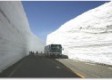
毎年4月、雪の壁とともに始まる立山黒部アルペンルートは、3000m級の山々が連なる北アルプスのダイナミックな景観を間近で望めます。そして支柱が1本もないロープウェイや全線トンネルのケーブルカーなど珍しい乗り物に乗れるのも魅力です。
Transportation
Where is Asakusa
LCC (Low Cost Carrier)
Japan Rail Pass
Rail Passes
Special Train Tickets
Narita Airport
Haneda Airport
Japan in Asia
From/To elsewhere
Tokyo - Kyoto
Tokyo - Takayama
Tokyo - Naoshima
Tokyo - KumanoKodo
Tokyo - Sapporo
Tokyo - Okinawa
Area by Area
Hokkaido
Tohoku
Kanto
Chubu Hokuriku
Kansai
Chugoku Shikoku
Kyushu Okinawa
Copyright
TOKYO RYOKAN
All Rights Reserved